
Establishing good oral care early in life is one of the most important steps you can take to support your child’s long-term health.
At Royce Dental Group, we often see that small daily habits – started early, make the biggest difference in preventing tooth decay.
Baby teeth (primary teeth) are essential for eating, speech development, and guiding adult teeth into position. This guide is based on current evidence and Singapore’s Health Promotion Board (HPB) recommendations to help parents confidently care for their child’s teeth from birth to age three.
Before Teeth Appear (Ages 0 - 6 months)
Why Baby Teeth Matter
Even though they are temporary, baby teeth are essential. Tooth decay in young children — known as early childhood caries — is one of the most common chronic conditions in childhood.It can lead to:
- Pain and infection
- Difficulty eating and sleeping
- Poor growth and development
- Problems with adult teeth later on
The good news: it is largely preventable.
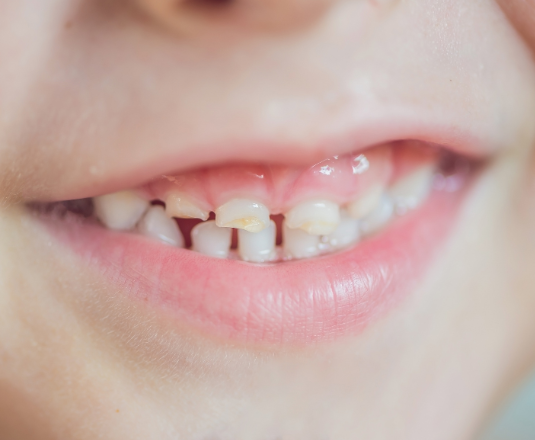
Oral care starts even before the first tooth appears.
What parents should do:
- Wipe your baby’s gums daily using a clean, damp cloth or gauze
- Clean after feeds where possible
- Avoid putting your baby to bed with milk or sweetened drinks
- If breastfeeding at night, try to clean the gums afterwards if possible

💡Why this matters
Wiping the gums reduces bacteria in the mouth and helps your baby get used to oral care from an early age — making the transition to toothbrushing much smoother when the first tooth arrives.
First Teeth Erupt (Ages 6 - 12 months)
The first tooth usually appears around 6 months of age. Once it does, brushing should begin straight away.
What parents should do:
- Start brushing as soon as the first tooth appears
- Use a soft-bristled toothbrush with a small head
- Brush twice daily, especially before bedtime
- Use a smear (rice-grain sized) amount of fluoride toothpaste
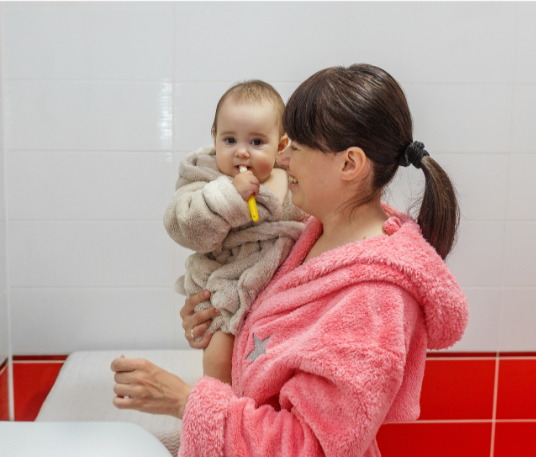
💡Singapore HPB Guidance
Wiping the gums reduces bacteria in the mouth and helps your baby get used to oral care from an early age — making the transition to toothbrushing much smoother when the first tooth arrives.
Feeding tips:
- Avoid frequent sipping on milk or juice throughout the day
- Introduce a cup from around 6 months and aim to stop bottle use by 12–18 months
Building Healthy Habits (Ages 12 - 24 months)
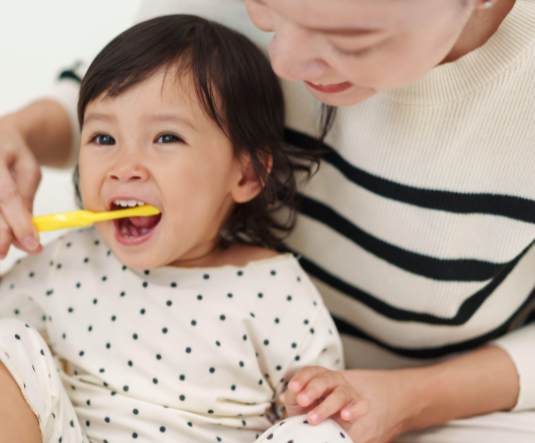
As more teeth erupt, consistency becomes key. At this stage, parents are still doing the brushing — toddlers do not yet have the dexterity to clean their teeth effectively on their own.
What parents should do:
- Continue brushing twice daily with a smear or rice-grain size of fluoride toothpaste
- Parents should brush for the child — toddlers cannot clean effectively yet
- Start flossing between teeth once teeth begin to touch each other on either side. A floss pick can be useful for easier manoeuvring
Diet advice:
- Limit sugary snacks and drinks. Better snack alternatives include fresh fruits, cheese, and yoghurt
- Offer water between meals
- Keep sugar exposure to mealtimes rather than frequent snacking throughout the day
Developing Independence (With Supervision) (Ages 2- 3 years)
By age 2–3, most children have a full set of baby teeth. This is an exciting milestone – but consistent brushing and parental supervision remain essential.
What parents should do:
- Continue using a smear amount or rice-grain size of toothpaste until age 3
- At age 3, increase to a pea-sized amount of 1000ppm fluoride toothpaste
- Encourage spitting — but don’t worry if it’s not perfect yet
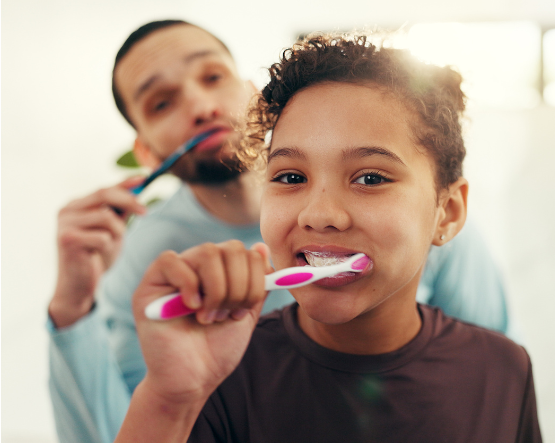
- Always supervise brushing
Conclusion
If you are unsure where to start, or if you have concerns about your child’s teeth, the best thing to do is bring them in early.
A first dental visit before age one is recommended – not because something is wrong, but because prevention always works better than treatment.
